
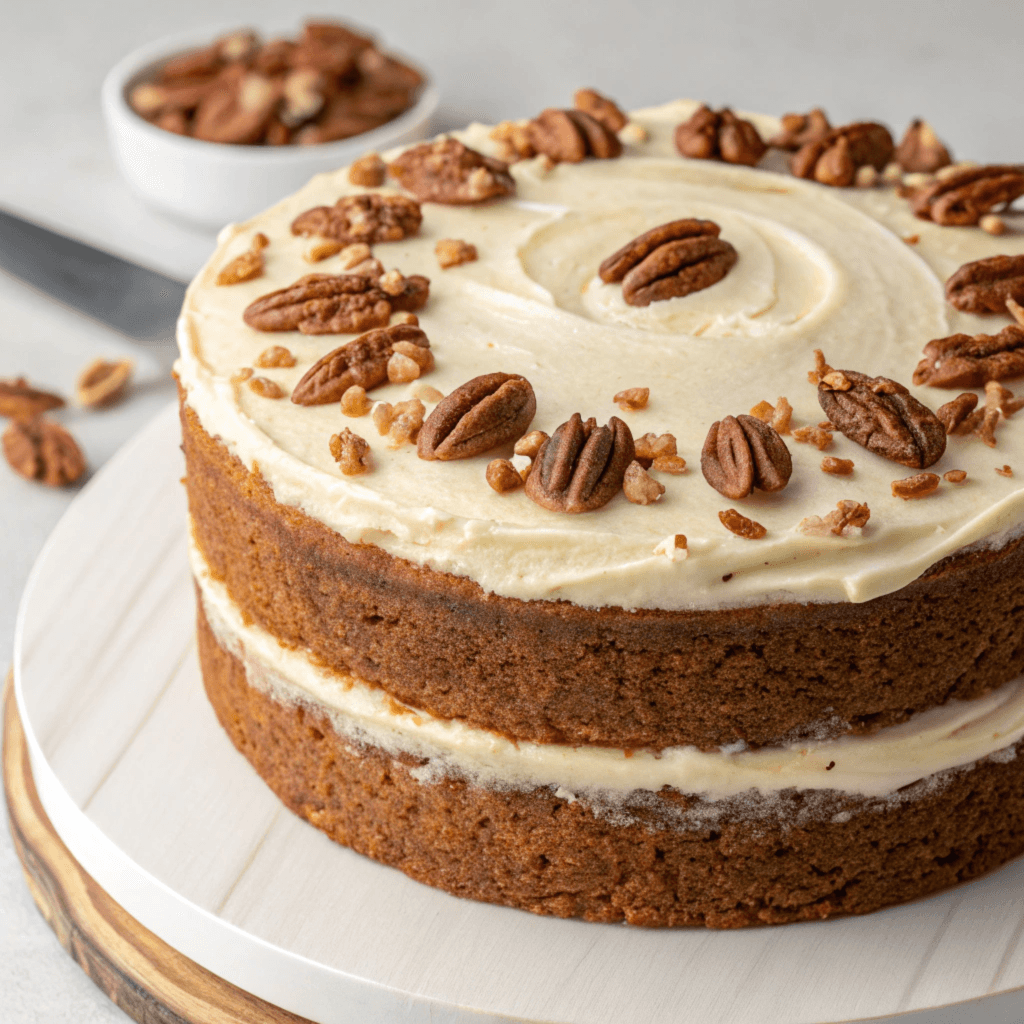
reating the perfect cake isn’t just about following a recipe it’s an art and a science combined. Many bakers ask, “What is the secret to super moist cake?” The answer lies in mastering the balance between ingredients, preparation techniques, and baking precision. From choosing the right flour to understanding how fats and sugars work, there’s a lot more to it than meets the eye. In this article, we’ll break down each step of the process to help you achieve bakery-level moistness every time. Whether you’re a beginner or a seasoned baker, these insights will transform the way you bake cakes.
Understanding Moisture in Cake Baking
Why Moisture is Key to Cake Success
Moisture is what gives cakes their irresistible texture and flavor. A dry cake can ruin even the best celebrations, while a moist cake keeps people coming back for seconds. But what exactly makes a cake moist? It’s not just about adding more liquid. Fats, sugars, and the proper handling of ingredients work together to create that luscious, melt-in-your-mouth experience.
The Role of Fat and Sugar in Cake Texture
Did you know that fats like butter or oil do more than add richness? They coat the flour particles, preventing gluten development, which keeps cakes tender. Sugars, on the other hand, attract and retain water, locking in the cake’s moisture. This is why recipes with higher sugar content often result in a softer, moister texture. It’s a delicate dance of chemistry that every baker should understand.
How Ingredients Influence Cake Moistness
Every ingredient in your cake plays a specific role in maintaining moisture. For instance, buttermilk adds tang and tenderness, while sour cream or yogurt contributes richness. Even something as simple as choosing cake flour over all-purpose flour can make a huge difference. Cake flour has a lower protein content, ensuring a softer crumb.
By understanding these foundational principles, you set the stage for success in your baking endeavors. Next, we’ll dive into how to choose the best ingredients to keep your cakes consistently moist. Stay tuned!
Choosing the Right Ingredients
Using Buttermilk vs. Regular Milk
One of the most effective ways to answer “What is the secret to super moist cake?” is by using buttermilk instead of regular milk. Buttermilk isn’t just tangy; its acidity breaks down gluten strands, leading to a softer, tender crumb. Regular milk doesn’t offer the same benefits, so if you’re aiming for bakery-quality results, buttermilk is your go-to. If you don’t have it on hand, you can make a quick substitute by adding a tablespoon of lemon juice or vinegar to a cup of milk.
The Power of Vegetable Oil and Fats
Fats are your cake’s best friend. While butter adds flavor, vegetable oil is unbeatable when it comes to locking in moisture. Unlike butter, which solidifies at room temperature, oil stays liquid, keeping your cake moist and soft for days. For the ultimate moist texture, many bakers combine both butter and oil in their recipes. It’s the best of both worlds rich flavor and unbeatable moisture.
Cake Flour vs. All-Purpose Flour: What Makes a Difference
When it comes to choosing flour, cake flour beats all-purpose flour for making moist cakes. Cake flour is lighter and has a lower protein content, resulting in less gluten formation. This Secures your cake has a soft, delicate crumb. If you only have all-purpose flour, you can create a similar effect by substituting two tablespoons of flour with cornstarch for every cup used. This small adjustment can make a big difference in your final result.
Incorporating Sour Cream, Yogurt, or Pudding Mix for Extra Moisture
Adding sour cream or yogurt to your batter introduces richness and helps your cake stay moist for longer. These ingredients not only add flavor but also provide extra fat and acidity, enhancing the overall texture. For an even easier solution, consider using instant pudding mix. It binds moisture to the batter while adding an extra layer of decadence.
Preparing the Perfect Cake Batter
Measuring Ingredients Accurately
Baking is a science, and nothing throws off a cake faster than inaccurate measurements. Too much flour can make your cake dense and dry, while too little fat or liquid leaves it crumbly. Use a kitchen scale for precise measurements, especially for dry ingredients like flour. A small error here can lead to big problems later.
The Importance of Room Temperature Ingredients
Cold ingredients can mess up your batter. Butter that’s too cold won’t cream properly with sugar, and eggs straight from the fridge can make your batter lumpy. To create a smooth batter that traps air and holds moisture, let all your ingredients come to room temperature before mixing.
Folding Egg Whites for Airy and Moist Cakes
If your recipe calls for folding in whipped egg whites, don’t skip this step. Gently folding them into your batter introduces air, giving your cake a light, fluffy texture while still keeping it moist. Overmixing at this stage can deflate the air bubbles, so use a gentle hand and a rubber spatula for best results.
Avoiding Overmixing to Retain Moisture
Once your wet and dry ingredients are combined, resist the urge to overmix. Overmixing activates gluten, leading to a dense, tough cake. Mix until just combined, and then stop. A few small lumps in the batter are perfectly fine and won’t affect the final bake.
By carefully choosing ingredients and mastering batter preparation techniques, you’re already well on your way to solving the mystery of “What is the secret to super moist cake?”. In the next part, we’ll Discover baking techniques to Secure your cake comes out perfect every time!
Baking Techniques for Super Moist Cake
Maintaining Proper Baking Temperature
The baking temperature can make or break your cake. Too hot, and the outer layer bakes faster, leaving the inside dry. Too low, and your cake becomes dense and uneven. The sweet spot? Stick to the recipe’s recommended temperature, and always preheat your oven. Investing in an oven thermometer Secures accuracy, as home ovens often run hotter or cooler than the setting.
Monitoring Bake Time Closely
Overbaking is the easiest way to ruin a cake. Start checking your cake a few minutes before the timer goes off. Use a toothpick to test if it comes out with just a few crumbs, your cake is done. Don’t wait for the toothpick to come out completely clean; that often means it’s already overbaked.
Using Light-Colored Pans for Even Heat Distribution
The type of pan you use matters more than you’d think. Dark pans absorb heat faster, leading to uneven baking and dry edges. Light-colored pans reflect heat and help your cake bake evenly, keeping it moist throughout.
Avoiding Overbaking: The Toothpick Test
Timing is everything. If you’re worried about overbaking, set your timer for the lowest suggested bake time. As soon as the edges pull away from the pan and the toothpick shows crumbs—not batter—take it out. Cakes continue to cook as they cool, so pulling them out slightly early preserves moisture.
For more tips on perfecting cakes, you might enjoy exploring Larder Recipes’ Ultimate Coconut Cake Recipe.
Post-Baking Tips for Moistness
Cooling Cakes Properly
How you cool your cake affects its texture. Let the cake rest in the pan for about 10 minutes before transferring it to a wire rack. Cooling in the pan for too long traps steam, making the cake soggy. On the other hand, cooling too quickly can dry it out.
Sealing Moisture with Syrups or Soaks
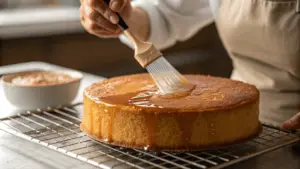
Professional bakers often brush cakes with simple syrups or flavored soaks to lock in moisture. A mix of water, sugar, and your choice of extract (like vanilla or almond) works wonders. Gently brush the syrup over the cake layers before frosting.
Storing Cakes to Preserve Moisture
If you’re not serving your cake immediately, wrap it tightly in plastic wrap while it’s still slightly warm. This traps steam, keeping the cake soft. For longer storage, freeze the wrapped cake, and thaw it at room temperature before serving.
Looking for more inspiration? Check out Larder Recipes’ Italian Cream Cake Guide for another moist and decadent dessert idea.
Troubleshooting Dry Cakes
Common Mistakes and How to Avoid Them
Even experienced bakers encounter dry cakes occasionally. One of the most common culprits is incorrect ingredient ratios too much flour or too little fat can spell disaster. Measuring ingredients accurately, especially flour, is essential. Using a scale instead of measuring cups can help eliminate guesswork.
Another mistake? Baking at the wrong temperature or for too long. Always preheat your oven, and don’t rely solely on your timer. Ovens vary, so visual cues like a slight pull-away from the pan’s edges can be more reliable than a timer.
Fixing Overbaked or Dense Cakes
If your cake turns out dry despite your best efforts, all is not lost. A simple syrup or milk soak can bring it back to life. Brush the liquid over the cake, allowing it to seep in before frosting. For dense cakes, slice thinner layers and use extra frosting or filling to lighten the texture. Remember, understanding what is the secret to super moist cake often comes from learning through trial and error.
FAQs About Moist Cakes
What is the Best Ingredient for Keeping Cakes Moist?
Fat and liquids are the key players. Ingredients like oil, buttermilk, and sour cream introduce richness and prevent drying. Additionally, using cake flour instead of all-purpose flour Secures a softer texture. When wondering, “What is the secret to super moist cake?” these ingredients are your answer.
Can I Use Non-Dairy Substitutes and Still Achieve Moisture?
Absolutely! Non-dairy alternatives like almond milk or coconut milk can work beautifully. Pair these with neutral oils like canola or vegetable oil for added softness. Vegan cakes often rely on applesauce or mashed bananas for moisture, which also add a subtle sweetness.
How Do Professional Bakers Keep Cakes Moist?
Professional bakers swear by techniques like layering syrup soaks between cake layers and using airtight storage methods. They also rely on precision accurate measurements and closely monitored baking times are non-negotiable in a bakery setting.
Is It Possible to Over-Hydrate a Cake?
Yes, it is! Too much liquid in the batter can cause a gummy, underbaked texture. To maintain balance, follow your recipe’s proportions and focus on the right combination of fats and liquids. When in doubt, moderation is key.
By addressing common mistakes and answering popular questions, you now have a complete guide to mastering what is the secret to super moist cake. With these tips and tricks, your cakes will stay soft, rich, and unforgettable every time.
Advanced Tips for Perfectly Moist Cakes
The Role of Humidity in Baking
Sometimes, the environment impacts your cake just as much as the recipe. Baking in a dry climate can strip moisture from cakes faster than expected. To combat this, consider placing a shallow pan of water on a lower oven rack. The steam helps maintain humidity, keeping your cake soft and tender. If you’ve ever wondered what is the secret to super moist cake, managing your baking environment is an often-overlooked answer.
Using Natural Sweeteners for Extra Moisture
Natural sweeteners like honey, molasses, or maple syrup not only Improve flavor but also add moisture. These ingredients retain water better than granulated sugar, giving your cake an edge in staying soft. Swapping out a small portion of regular sugar for one of these can work wonders, especially for cakes like banana or carrot varieties.
Experimenting with New Ingredients
If you’re feeling adventurous, try incorporating fruit purees or even vegetable-based ingredients like shredded zucchini. These additions don’t just boost moisture but also add nutrients. Plus, they make for a great conversation starter at any gathering!
Bringing It All Together
Combining Techniques for Foolproof Results
Mastering what is the secret to super moist cake comes from layering techniques. Start with the right ingredients, like buttermilk or oil, and measure them precisely. Then, fold in whipped egg whites for airiness and bake at just the right temperature. Finally, lock in moisture with a simple syrup or a tightly sealed wrap. Each step builds on the last, ensuring success.
Final Thoughts on Cake Moisture Mastery
Becoming an expert baker is all about practice and patience. Even if a cake doesn’t turn out perfect the first time, learn from the experience and tweak your approach. By applying these techniques and understanding how each factor affects moisture, you’ll never have to ask, “What is the secret to super moist cake?” again. Instead, you’ll be sharing your newfound wisdom with others!
[tasty-recipe id=”1136″]